Face-clamping chuck for thin rings, short parts and workpieces with outside-diameter interference.
Finger / Face-Clamping Chuck
KORRETTO finger chuck is a face-clamping chuck used when the workpiece cannot be held deeply from the outside diameter. The finger-type clamping elements contact the end face or limited clamping areas, making it suitable for thin rings, short workpieces, disc-type parts and components where outside clamping would interfere with the machining area.
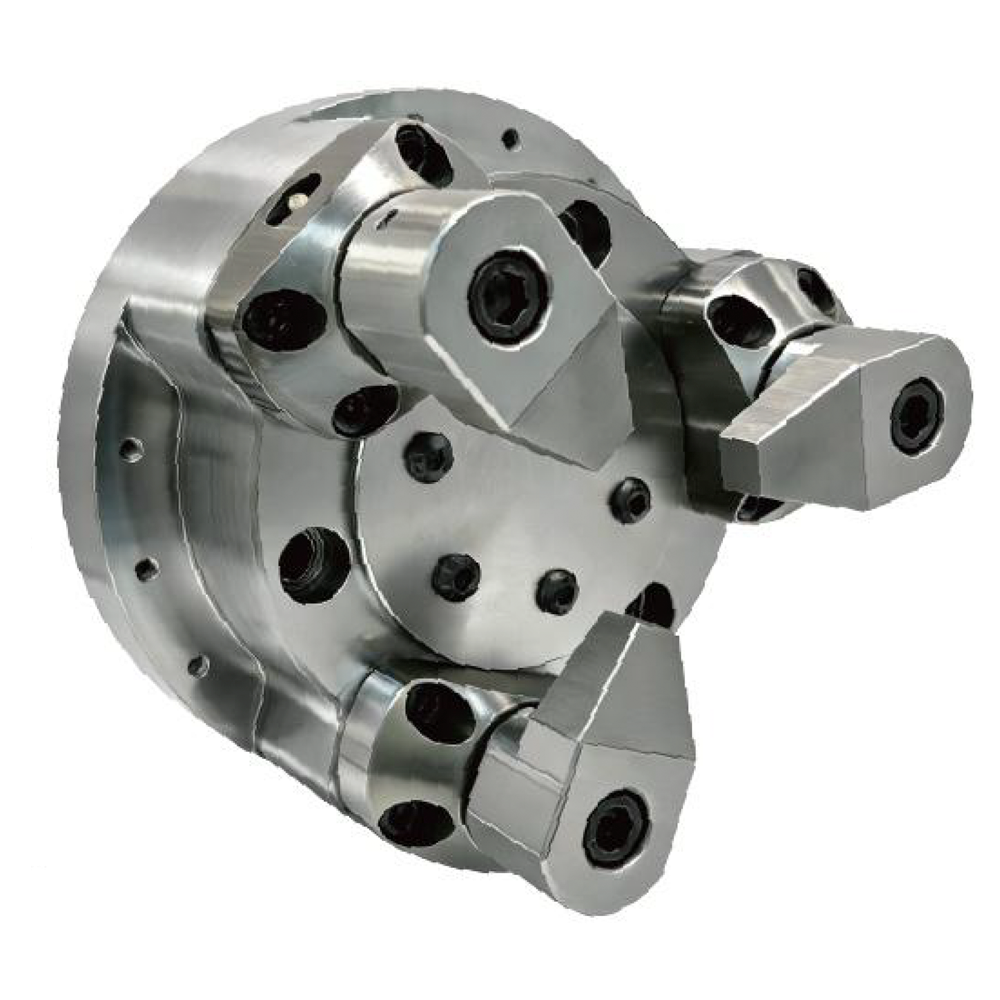
Product Overview
The finger / face-clamping chuck is a special hydraulic chuck used for workpieces that need axial or end-face holding instead of conventional outside-diameter gripping. It is useful when the clamping area is limited, the part is short, or the outer surface must remain open for machining.
This type of chuck should be selected according to the workpiece end face, available clamping area, wall thickness, cutting load, machine spindle interface and required repeatability.
Key Features
| Feature | Description |
|---|---|
| Face-clamping structure | Holds the workpiece from the end face or limited contact area. |
| Finger-type clamping elements | Useful when conventional jaw contact is not suitable. |
| Reduced outside-diameter interference | Leaves more outside surface available for machining. |
| Suitable for thin or short parts | Used for thin rings, short blanks and disc-type workpieces. |
| Special hydraulic chuck application | Designed for specific clamping problems rather than general jaw chuck use. |
Typical Applications
- Thin ring parts
- Short workpieces
- Disc-type components
- Workpieces with outside-diameter machining interference
- Parts requiring end-face clamping
- CNC lathe special fixtures
Technical Data and Dimensions
Use the drawing and parameter tables to check chuck size, installation dimensions, clamping stroke, hydraulic force, clamping force, speed and workpiece compatibility. The finger contact area must be reviewed together with the workpiece drawing.
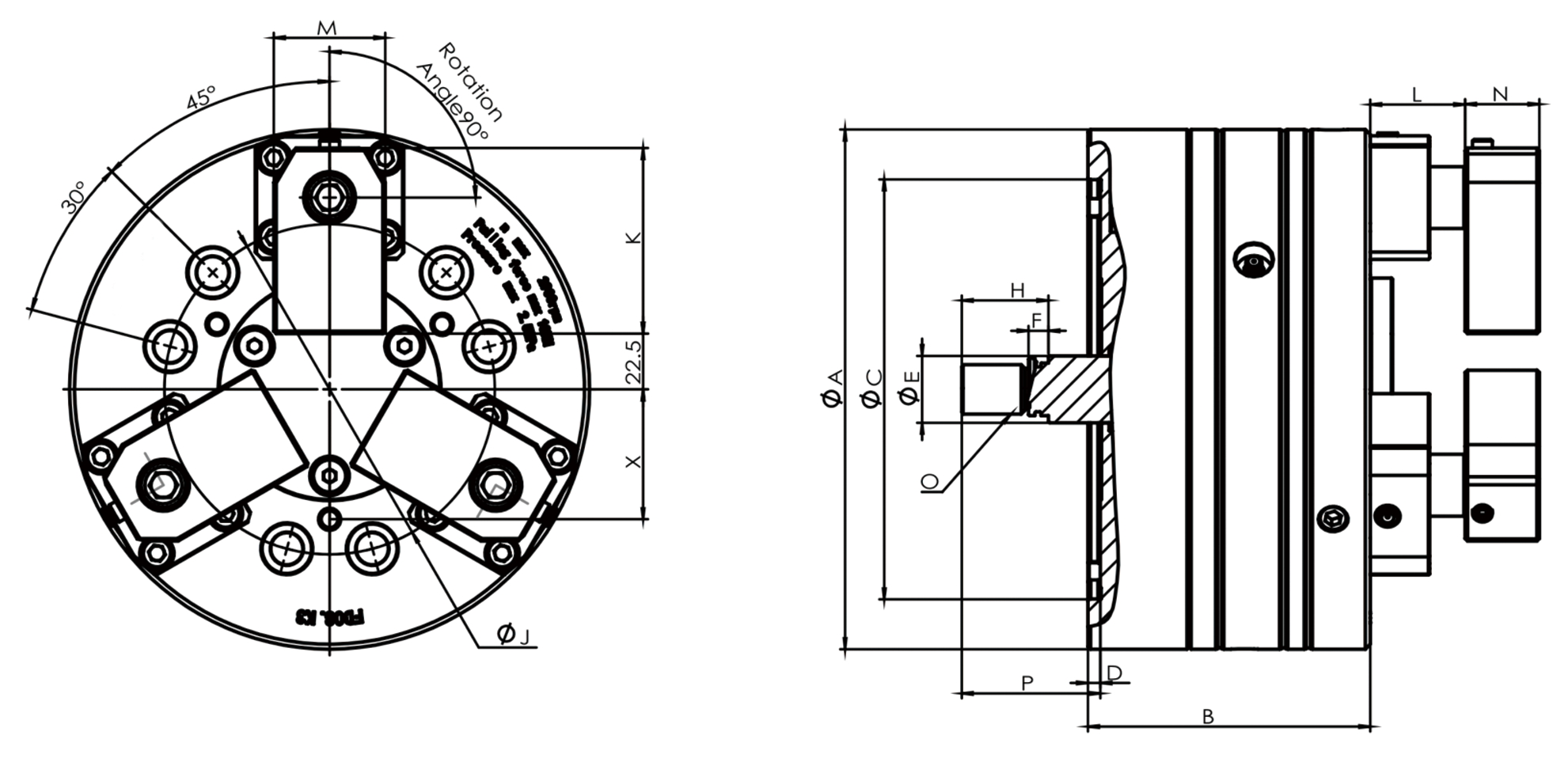
Use this drawing to confirm installation dimensions and technical parameters.
| Model | A | B | C | D | E | F | H | I | N | O | P |
|---|---|---|---|---|---|---|---|---|---|---|---|
| FK-08 | 210 | 110 | 170 | 5 | 30 | 8 | 35 | 38.3–58.3 | 30 | M20*2.5 | 56–76 |
| FK-10 | 254 | 120 | 220 | 5 | 30 | 8 | 35 | 38.3–58.3 | 30 | M20*2.5 | 56–76 |
| Model | Jaw Swing Stroke (mm) | Jaw Vertical Stroke (mm) | Jaw Compensation (mm) | Max. Clamping Force (kN) | Max. Speed (r/min) | Net Weight (kg) |
|---|---|---|---|---|---|---|
| FK-08 | 12 | 8 | 2 | 21 | 2900 | 28 |
| FK-10 | 12 | 8 | 2 | 26 | 2400 | 37 |
Selection Notes
- Confirm whether the part can be clamped from the end face.
- Check available clamping area, wall thickness and part rigidity.
- Review whether outside-diameter clamping interferes with machining.
- Confirm clamping force, finger stroke and locating method.
- For thin-wall parts, compare diaphragm chucks and rubber-flex collets when deformation risk is high.
FAQ
What is a finger chuck used for?
A finger chuck is used for face clamping or limited-area clamping when the workpiece cannot be held effectively by standard outside-diameter jaws.
What is the difference between a finger chuck and a standard jaw chuck?
A standard jaw chuck usually grips the outside diameter. A finger chuck uses finger-type clamping elements to contact the end face or limited areas of the workpiece.
Is this suitable for thin ring parts?
Yes. Thin rings and short parts are common applications, but wall thickness, clamping force and support surface must be checked carefully.
When should I choose this chuck?
Choose it when outside clamping causes interference, the part is too short for normal gripping, or the end face provides the better clamping surface.
What information should I send for selection?
Send the workpiece drawing, end-face shape, available clamping area, wall thickness, material, machine model, spindle nose and required machining process.